
Both headaches and migraines are uncomfortable and unwelcome. Here’s how to spot the difference between them and treat each type.
A sore head is unfortunately something everyone can relate to. However, not all sore heads are created equal.
Understanding the difference between a headache and a migraine can help you identify the best way to treat the pain – and perhaps even avoid its onset in the future.
What types of headaches are there?
As awful as migraines are, that’s not to say headaches are a walk in the park. They can be enough to ruin your day, so it’s worth knowing what triggers a headache and how to treat one.
Here are a few types of headaches you can experience:
- Caffeine headaches (from consuming too much caffeine)
- Exertion headaches (from excessive physical work)
- Allergy or sinus-related headaches
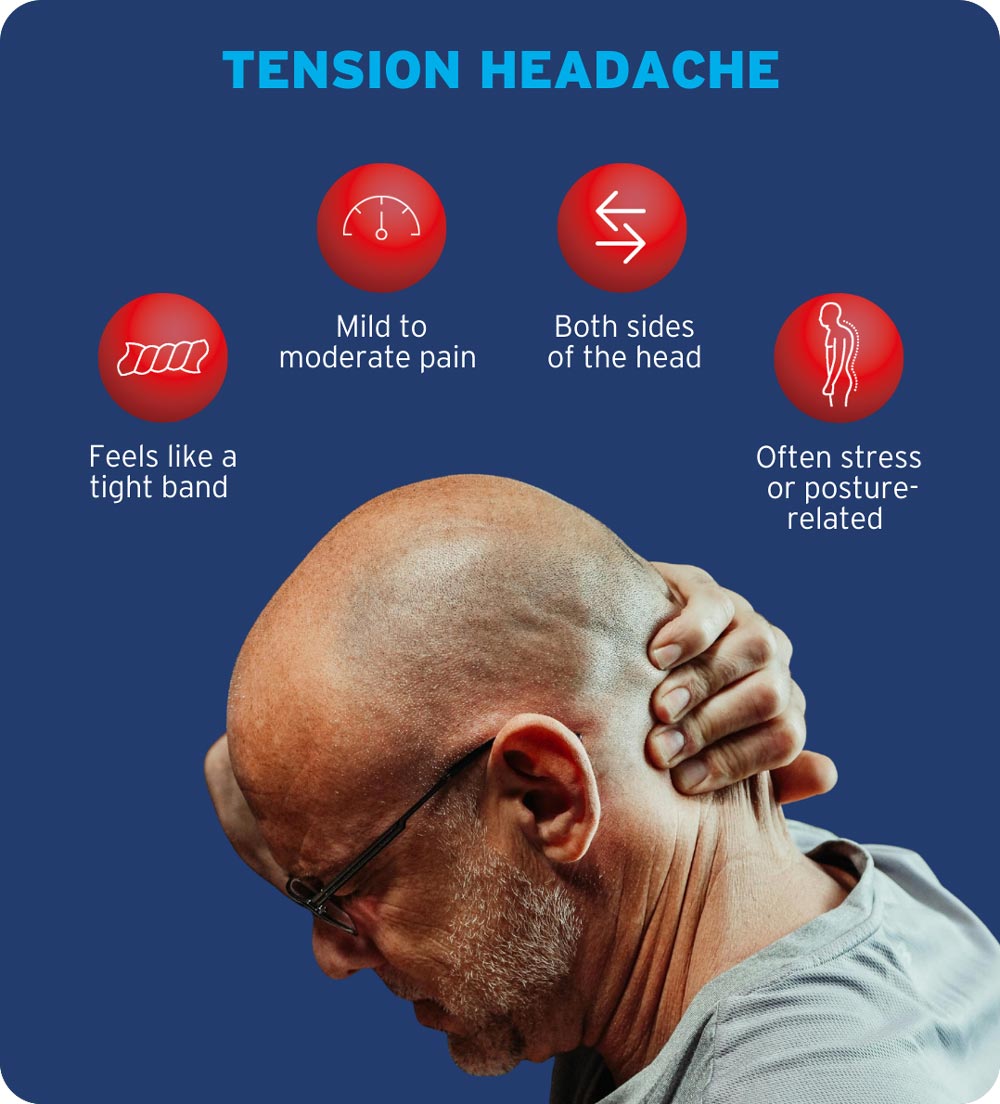
- Tension headaches (when your head and neck muscles become tense)
- Cluster headaches (short but painful headaches that tend to follow a pattern)
- Dehydration headaches (from not drinking enough water)
Headaches can be short-lived or long, dull or piercing, located behind the forehead or throughout the head. Causes are sometimes obvious, but are often mysterious.
What’s the difference between a headache and a migraine?
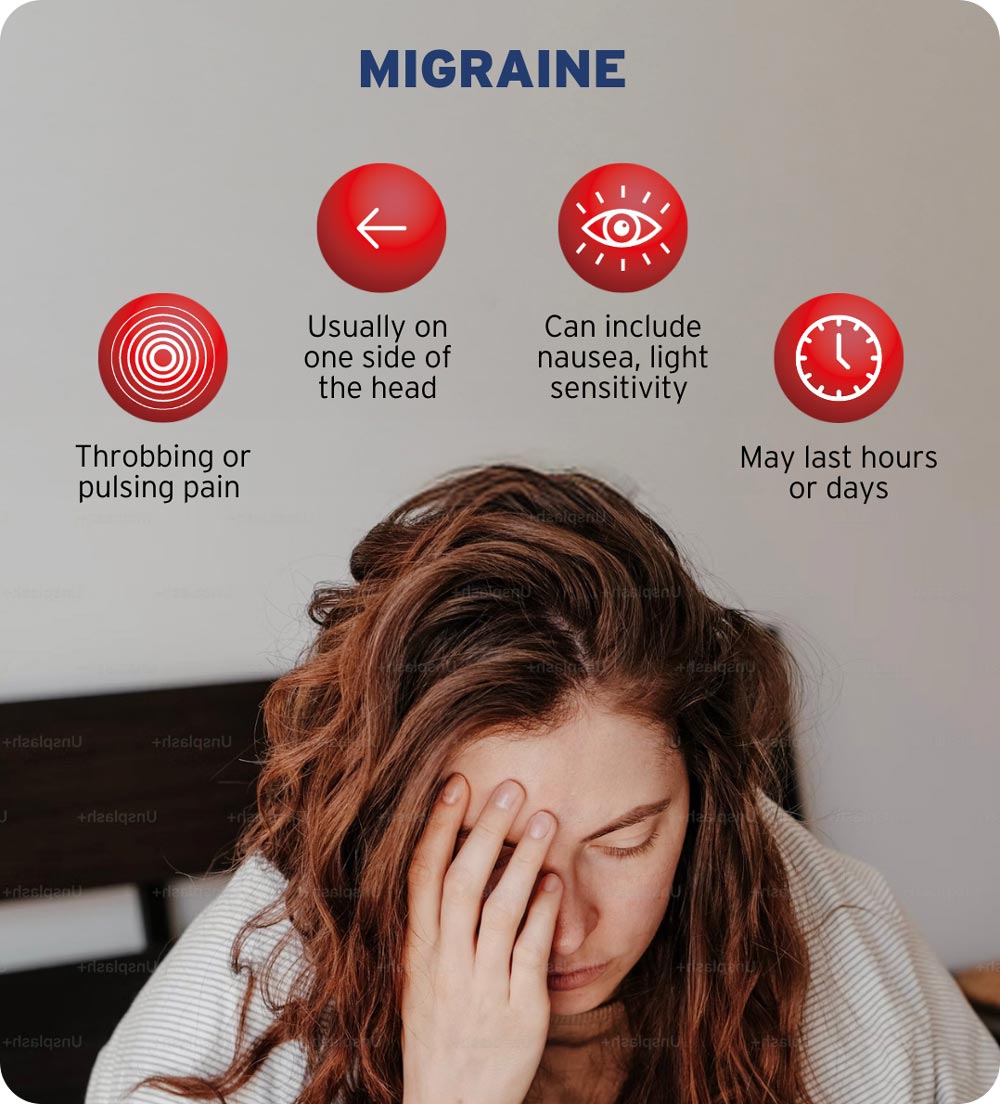
A migraine is a severe headache. A headache is usually uncomfortable but manageable with over-the-counter pain medication. However, a migraine is notably worse and may not respond to pain relief.
Migraine symptoms
In addition to head pain, migraines are also often accompanied by other unpleasant symptoms, such as:
- Vomiting
- Nausea
- Vision loss
- Sensitivity to light
- Auras*
*Auras are bright lights – often zigzags or lines – that appear in your vision. Some people even suffer from aura migraines, where they experience auras but no pain.
Migraines are more common in women and usually affect those aged 10 to 30 the most. Unfortunately, migraines are often not one-off events. If you experience one, you’re likely to have repeat attacks.
What triggers migraines?
Very little is known about the causes of migraines. They are thought to be related to changes in blood flow to the brain. They are also believed to be genetic.
Researchers have found certain triggers can sometimes lead to migraines. For those who suffer from regular attacks, it might be helpful to know of the triggers and avoid them as a precaution.
Common migraine triggers include:
- Alcohol consumption (red wine in particular)
- Exhaustion or tiredness
- Heavy exercise (especially when you’re not used to exercising)
- Excessive caffeine intake
- Stress, anxiety, or depression
- Hormonal changes (migraines are more common for women right before a period)
- Long-distance travel
- Weather changes
- Changes to sleep patterns
- Certain medications
- Overstimulation from loud noises, lights, or smells
- Certain foods, such as chocolate
If you experience a migraine, it’s a good idea to note down what you were doing or eating shortly before it struck.
Everyone is different, but if you can pinpoint some of the triggers behind your own migraines, you may be able to minimise the number of attacks or potentially avoid them altogether.
How to manage headaches and migraines
While it’s always best to avoid a headache or migraine whenever you can, help is at hand for the days when you cannot. Maxigesic® is a pain relief medication that offers better and faster pain relief than ibuprofen or paracetamol alone.* This world-first was developed right here in New Zealand, and you can buy it over the counter at your nearest pharmacy or supermarket.
There will be times when you can avoid a headache completely, but there will also be days where there’s little you can do but manage the symptoms as best you can. For those days, Maxigesic can help. This ground-breaking medicine was developed in New Zealand, and offers fast, effective, double-action pain relief. Buy it online or at a leading pharmacy or supermarket near you.
For more advice and tips on everyday health, sign up to our newsletter for fresh content in your inbox.
Important information This content is for informational purposes only and should not replace advice from your healthcare professional. If symptoms persist or you need specialist guidance, please consult your healthcare professional.
*Daniels et al (2018). Result achieved in a trial of post-operative pain relief after removal of at least 2 wisdom teeth using MAXIGESIC® (Paracetamol 975mg/Ibuprofen 292.5mg) compared with Paracetamol 975mg or Ibuprofen 292.5mg alone 4 times a day (Paracetamol 3900mg or Ibuprofen 1170mg per day). Study results assessed on the intent-to-treat (ITT) population with adjustment for the use of rescue medication. MAXIGESIC® 975/292.5mg US combination is bioequivalent to MAXIGESIC® 1000/300mg NZ combination at full dose (Aitken et al, 2018). Research sponsored by AFT Pharmaceuticals.
MAXIGESIC® film-coated tablets are for the temporary relief of pain and reduction of fever and the discomfort associated with fever. Incorrect use can be harmful. Do not use if you have asthma or a stomach ulcer. Do not use in children under 12 years or if you have kidney disease. Do not exceed the daily recommended dose. Always read the label and use strictly as directed. If symptoms persist or side effects develop, contact your healthcare professional. AFT Pharmaceuticals, Auckland, New Zealand. TAPS PP5641 NZ Patent No. 552181.
Do NOT combine with any other Paracetamol or Ibuprofen-containing medicines. Do NOT exceed the daily recommended dose.
