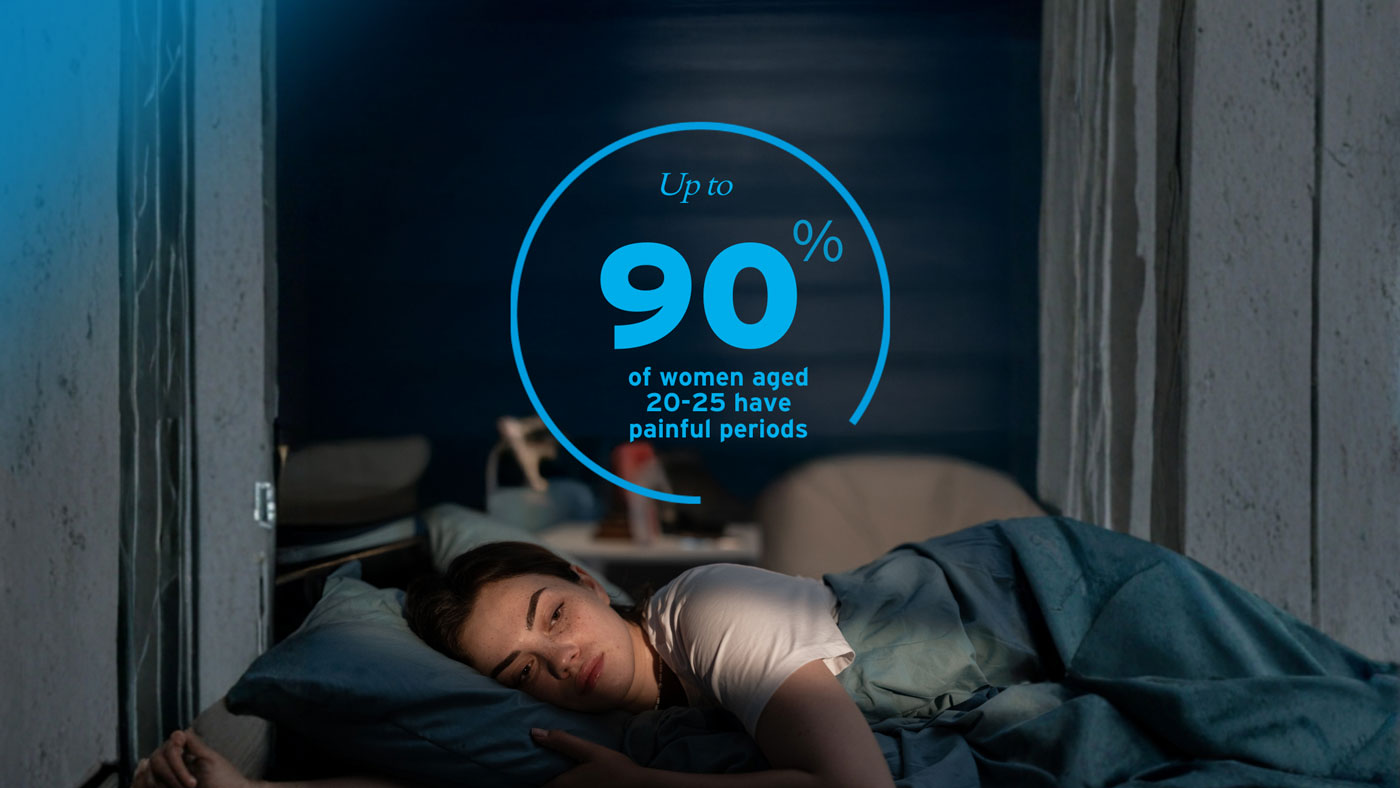
Period pain can be especially tough for teenagers. The early years of menstruation often come with confusion, anxiety, and a whole lot of learning — which is why support from trusted adults makes a big difference. Here are some ways to help them navigate period pain and understand what’s normal (and what isn’t).
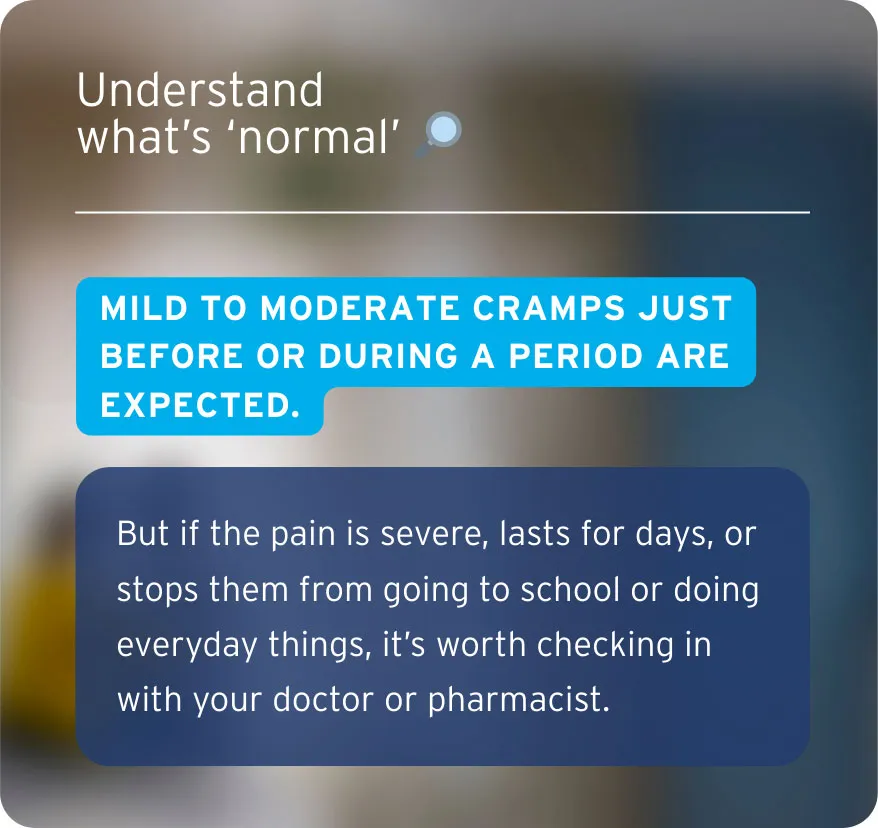
Explain what’s ‘normal’
“Normal” can look different for everyone, but it’s helpful to understand the general range. Mild to moderate cramping, bloating, or discomfort before or during a period is common.
However, if a teenager is experiencing severe, long-lasting or debilitating pain, it may be a sign of something more. Around one in ten New Zealand women have endometriosis, which is often characterised by intense pain that interferes with daily life.
Severe pain can also be linked to fibroids, ovarian cysts, or premenstrual dysphoric disorder (PMDD). If something doesn’t feel right or the pain seems excessive, it’s best to speak with a healthcare professional rather than relying on pain relief alone.
Talk about periods often and early
The more periods are talked about, the less mysterious – and less stressful – they become. If possible, start the conversation before their first period so they have a sense of what to expect.
Helpful topics to cover include:
- PMS and mood changes
- normal discharge
- hygiene habits
- the basics of Toxic Shock Syndrome (TSS)
- how to track their cycle
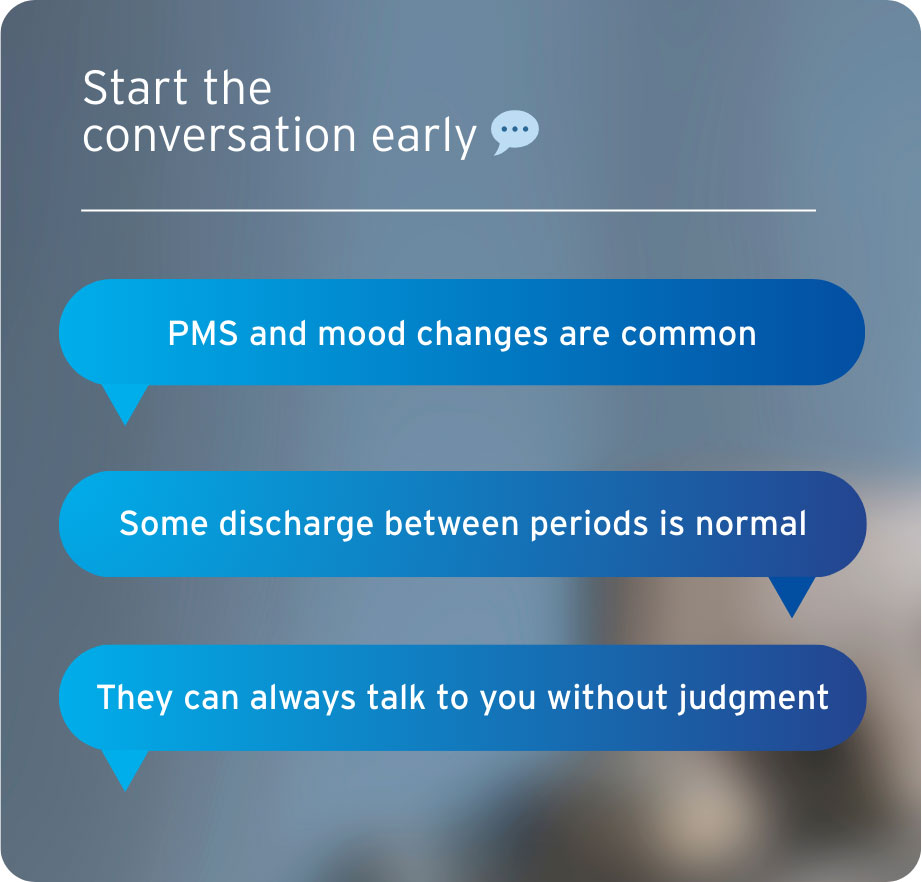
Making periods an open, judgment-free topic helps teens feel comfortable asking questions when they need to.
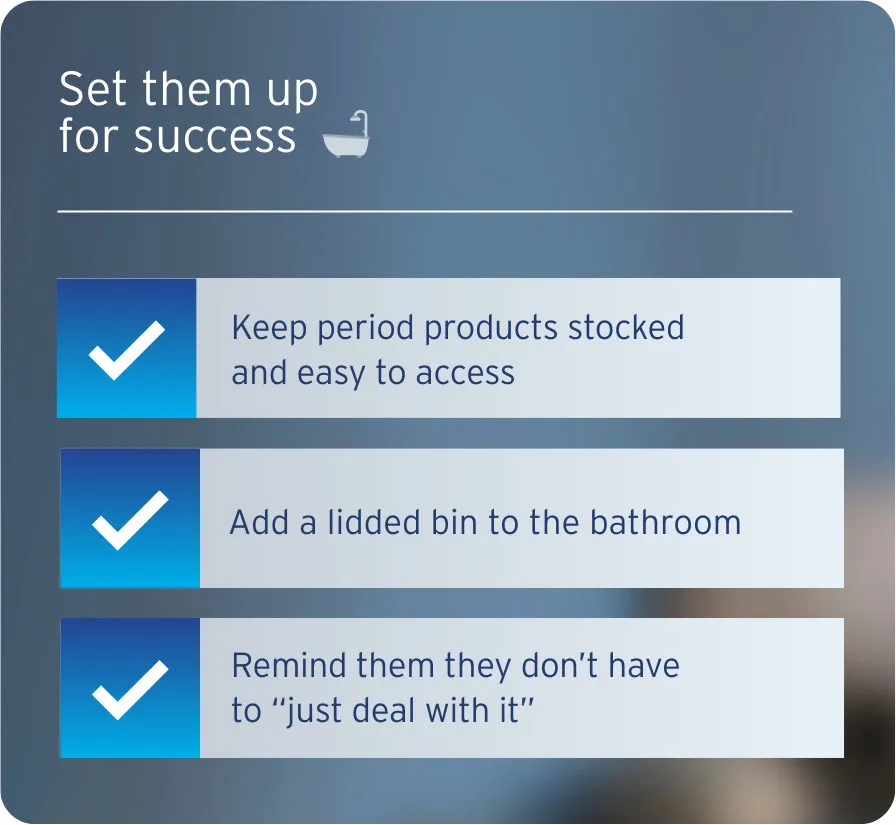
Set up their environment for success
Small, practical steps can make the whole experience easier:
- Keep pads, tampons, or period underwear easily accessible — at home and in their school bag.
- Make sure there’s a bathroom bin with a lid and liner.
- Avoid hiding period products; storing them in plain sight normalises menstruation and signals that it’s nothing to be embarrassed about.
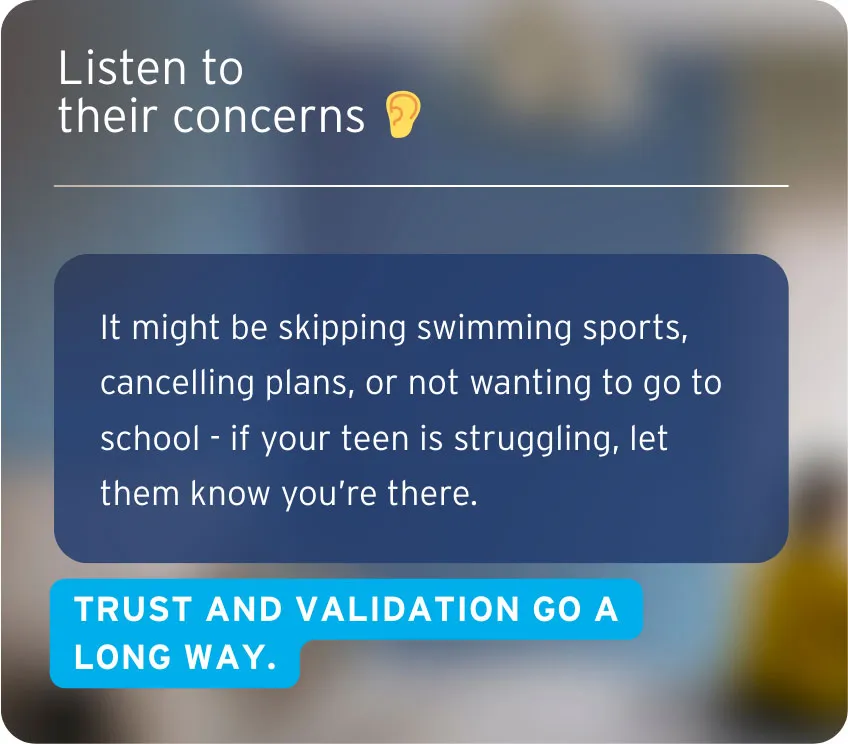
Listen to their concerns
Some teens may feel stressed or self-conscious during their period, especially around school events like athletics or swimming. Try to be understanding and avoid pressuring them into activities if they’re uncomfortable.
Let them know they can talk openly with you, and reassure them that their worries will be handled sensitively – and shared only with the people who need to know, like a trusted family doctor.
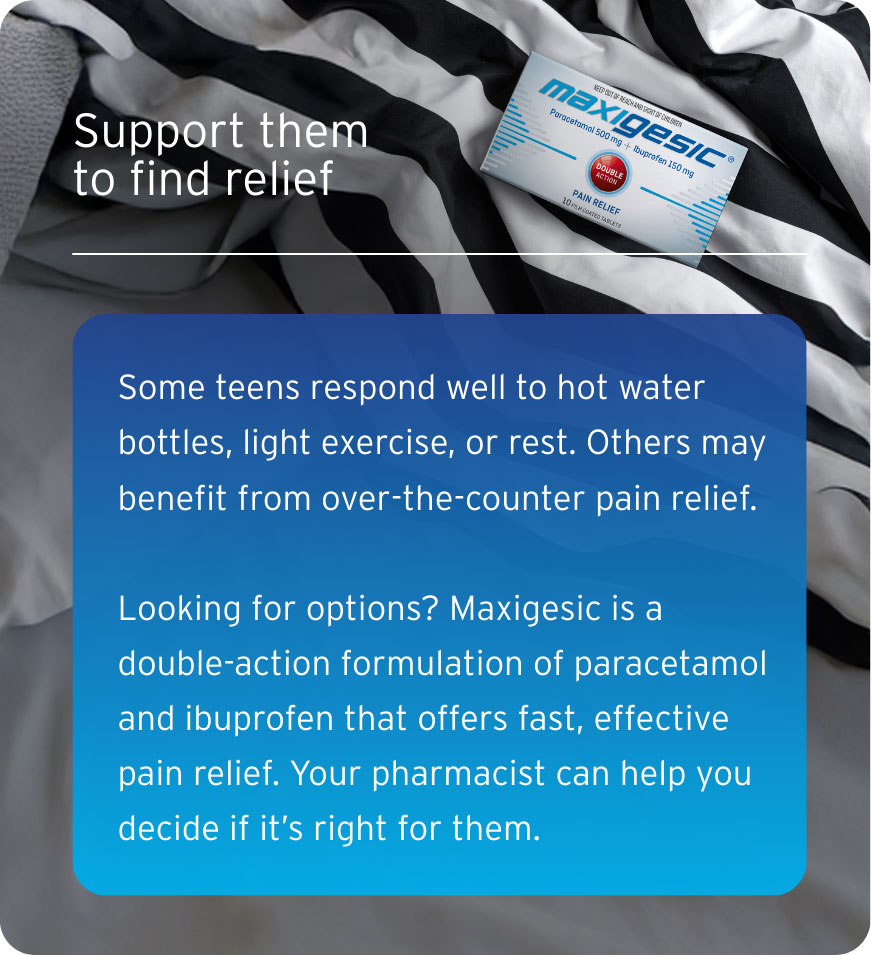
Support them to find appropriate pain relief
It may take time for teens to figure out what works best for their body. Some may find relief with heat packs, gentle movement, a
warm shower, or rest.
Over-the-counter pain relief can also help. Maxigesic®, which combines paracetamol and ibuprofen, may provide effective double action relief for period-related pain and inflammation. If pain is severe or not improving with typical remedies, seek advice from a healthcare professional.
In summary
A supportive, open environment can make a world of difference for teenagers navigating their early years of menstruation. By listening, educating and helping them find the right tools you can ensure they feel understood and never alone in managing period pain.
Important information This content is for informational purposes only and should not replace advice from your healthcare professional. If symptoms persist or you need specialist guidance, please consult your healthcare professional.
MAXIGESIC® film-coated tablets are for the temporary relief of pain and reduction of fever and the discomfort associated with fever. Incorrect use can be harmful. Do not use if you have asthma or a stomach ulcer. Do not use in children under 12 years or if you have kidney disease. Do not exceed the daily recommended dose. Always read the label and use strictly as directed. If symptoms persist or side effects develop, contact your healthcare professional. AFT Pharmaceuticals, Auckland, New Zealand. TAPS PP5641 NZ Patent No. 552181.
Do NOT combine with any other Paracetamol or Ibuprofen-containing medicines. Do NOT exceed the daily recommended dose.